Monday, March 28, 2011

I Am: Identity in Submission

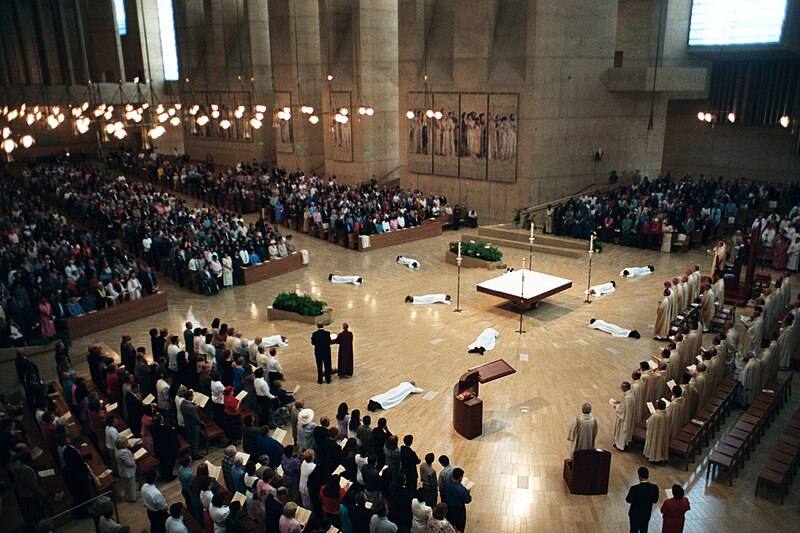
Deacon Ordination by Eric Stoltz
Used under CC BY-SA 2.5 (Wikipedia)
Over at Political Jesus, Rod wrote a fantastic post entitled In Christ, neither Mainline or Sectarian: On Ecumenism & Identity: Towards a Postcolonial Orthopraxis of Reconciliation. In the post, Rod grounds the catholic nature of the church in Christ's physical resurrected body, saying, "Our unity in Christ is not the denial of bodily existence, but about the participation in the life of God Incarnate." I would add to this, as I have discussed before, that we come into this unity through the confession of the creed.1

However, a potential problem was raised by Rod himself in the comments, how do we avoid catholic Christianity becoming "another form of consumerism." That is, how do we avoid our choice of denomination becoming merely a form of branding? I wear Nike, you wear Adidas. I'm an Anglican, you're a Lutheran. If this is our approach, then our ecumenism, in attempting to affirm the unity and community of the Christian faith, becomes instead an affirmation of individualism and appetite.

The question itself came up when another writer at Political Jesus, Amanda, questioned hybrid terms of Christian faith "Bapti-costal; Congre-costal; Anglo-Lutheran; Pente-Catho; Cal-minian, etc. It’s like dogs. Once you have to hyphenate what they are, just call them a 'mutt.'"

In other words, how is a mixed denominational identity any identity at all? To a very great degree, I sympathize with this view, and the reason for that sympathy is tied into why I think we can have ecumenism without Christianity becoming pure commercialism.

I think that the answer to this lies in submission. As Christians, we submit ourselves to streams within the catholic tradition. So, example, I am an Anglican. In our submission, we take both the good and the bad of our stream. We take on its practices, it accomplishments and even its guilt. Thus, I can be proud of the fact that C.S. Lewis is an Anglican, but I also take on the responsibility for the martyring of Roman Catholic brethren at the hands of Anglicans.

Even if I do not understand a position of my stream, in entering into the denominational body I submit to it. For example, I do not understand the Anglican position that only a priest in the apostolic succession can bless the Eucharist, I nevertheless submit to it in praxis. I am an Anglican and I am not a priest, so I will not consecrate the elements.

It is because of this submission that consumeristic individualism is avoided. Because I have to take the good with the bad, it is not all about me. My identity becomes part of another identity.

This isn't to say the individual is completely subsumed by his denominational identity. Any individual is going to have things on which they differ from their denomination, and that's fine to a point.

For one, I think an individual is always free to critique her denomination, and seek change in it, so long as she remains in reasonable submission to its traditions while she remains a part of it. Tradition is a thing always in flux, and one should not think of submission to it in a static manner.

To bring Wittgenstein in again, any term is going to have "fuzzy" areas around the edge. At the same time, there is a point at which a thing can no longer be sensibly referred to by that term. A Roman Catholic who uses birth control is still Roman Catholic, but one who takes communion at a protestant church, rejects transubstantiation, apostolic succession, and the authority of the Pope, cannot rightly be called Roman Catholic.

Thus, there is a point at which one breaks with submission to one's denomination, though remaining part of the creedal body of which it itself is a part. I especially think this should be done if one comes to see some of its practices as grossly immoral (see for example Sinéad O'Connor's call for a new Roman Catholic Church).

What, then, of hybrids? Again, my first inclination, along with Amanda, would be to call them mutts. However, I think there is an answer to this, and the answer lies in why we submit to a denomination. The goal is always Christ. The Christian life is to seek fidelity to Christ, and to try and bring others as close to Him as we are able. We all do this, ultimately, by joining into His body by way of the creed. As part of this process we inevitably submit to a tradition, but that tradition can be that of the independent Christian. That is, we can come to think the best way to be in fidelity with Christ is actualizing ourselves through our own understanding of scripture, and acting what we think to be the best example of Christian life. We can decide that being a Pentecostal Presbyterian, as Eugene Peterson calls himself, is the best way for us to seek fidelity with Christ.2 I don't necessarily think this is the best tradition to submit to, but it is a tradition within our faith nonetheless.

In summary, we are Christians by our participation in His body, through our affirmation of the creed and in submission to a tradition, the end of which is always fidelity to Christ. It is in our submission to a tradition that consumeristic individualism is avoided, though paradoxically that tradition can be one of individual judgment.
__________________________________________________________

1.More specifically, it is the capacity to recite the creed. Not all orthodox Christians actively recite the creed as part of their tradition, but all can affirm the creed.
2. Another interesting thing, though not what I'm dealing with in this post, is the overlap of different descriptors in Christianity. There's high church or low church, apostolic or non-apostolic, various denominations, etc. and these don't necessarily seem to me to fulfill the same grammatical "space."

Saturday, March 26, 2011

That

The following poem is one which came to me suddenly last night as I contemplated questions of identity. These poems that come, that birth themselves, are my favorite.

That

he is that I am.
I am
that I am not
emptied like a chalice
upon the ground.
a libation

unto him
I am

Friday, March 25, 2011

Hail Mary, Full of Grace

Annunciation by Carvagion
Wikimedia Commons


Mary the Mother of God. Today is the Annunciation. Today is her day. As someone still feeling his way into the world of the liturgical church, this is something very new to me. But I think it's important, so I asked my friend Fernando, who has always been better at sacrament than me, to do a guest post. This post is for me, and for all those like me who don't get Mary. So, without further ado, Fernando:


During the Lenten season, it’s important that — in addition to praying for the end of suffering in the world — we focus our attentions on the work of Christ. While Easter may be proof of his divinity, the Passion seem evidence of his humanity. Indeed, it was necessary that Christ be human, for it is humans who suffer. And one cannot contemplate Christ’s humanity without contemplating the Annunciation. I’ve already posted some thoughts on the Annunciation on my own blog, but those were focusing on Gabriel’s role. This time, I turn to Mary.

I’ve long been persuaded of the belief that the acts of Christ is best though of as a single, whole work; in my mind the Incarnation, Baptism, Teaching, Miracles, Crucifixion, Resurrection, and Ascension of Jesus are as intertwined as the persons of the Trinity are. But also intertwined with those, are the sorrows and joys of Mary: hearing the angel announce the pregnancy. The pain of childbirth. The rejection of her son by the people he was trying to reach. Seeing him after the resurrection. Being present at Pentecost.

Protestants are bad at Mary. Too often Christians just don’t know what to do with her. In response to the abuses that lead to the Reformation, we have become so afraid of Mariolatry that instead we say nothing at all about the Mother of God. Even that phrase, “Mother of God,” has a bad reputation among some circles for being idolatrous.

But it’s true.

We cannot separate Jesus’s humanity from his divinity. God became a man. God fasted and was hungry. God suffered and was cold. God’s feet hurt. God was whipped and beaten and nailed to a tree.

God died.

For Christianity to be true, all of those statements must be said. It’s the essential core of our faith, that God became flesh and dwelt among us as emmanuel. So here’s one more necessary truth: if God died, God was born. Therefore, if God was born, God had a mother. Yet even this simple title is denied by some. As a child, I was told that Mary was not the mother of God: she was the mother of Jesus’s human part, but not of God. As though they were separate! Or “human Jesus” and “God Jesus” had different beings instead of one person! I think people are uncomfortable with the title because they think it implies that Mary is the mother of the Father: Mary can be the mother of Jesus, sure, but not the mother of God. But this is a problem too: the Father is God. The Son is God. The Son is not less God than the Father. The Son became human, in becoming human, the Son has a mother. And so, whatever the reason may be, denying the Theotokos flirts dangerously close to any number of Trinitarian heresies.

In all our post-Reformation hesitation about Mary, we should remember that the words —
Hail Mary, full of grace,
the Lord is with thee.
Blessed art thou among women,
and blessed be the fruit of thy womb,
Jesus —
all come from the gospel of Luke. It is not the Roman Catholic Church, but from the Bible that we hear that all generations will call Mary blessed (St. Luke i.48). The Word of God, from the very cross itself, commands us to behold our mother (St. John xix.27).

How then do we honor Mary, without worshiping her?

God became a human. As I said, that is the heart of Christianity. And mysteriously, Mary is integral to that. In contemplating her relationship to the Godhead, we realize many things about the faith itself — or realize, at least, how little we can understand.

Dante, naturally, stated the mystery best:

“Virgin Mother, daughter of your Son,
      humbler and loftier past creation’s measure,
      the fulcrum of the ever lasting plain,
You are she who ennobled human nature
      so highly, that its Maker did not scorn
      to make Himself the Creature of His creature”
                                                  (Paradiso 33, 1-6)

There is so much paradox in Mary, but then there is so much paradox in the Incarnation as a whole. Dante can see it, even in the familiar paradox we hardly even notice anymore. Virgin mother. But also the more subtle position of Mary before God. Mary is necessary for God to enter this physical, temporal, fleshly reality. The walls of her womb are the first thing Jesus sees. Consequently, Mary becomes something like the firstfruits of Christianity, the first human to represent humanity before the God-man. Up to the Ascension, Mary was the penultimate priest of humanity.

And in her position standing before God, there’s another truth about Mary that is the simplest, but hardest to wrap our heads around: Mary loves God more than you or I do, maybe more than is possible.

All of us can say with the apostle Thomas, “My Lord and my God!” when we contemplate Christ. We can even say along with John that we are the one Jesus loved. At our most holy, perhaps we can even dare to say of Jesus that we are our Beloved’s, and our Beloved is ours.

But none of us, ever, will be able to say of Christ, “my son.” If we could witness the Crucifixion, as life-shatteringly painful as it might be for us, it could not compare with the real pain she felt. When the nails pierced his skin, a sword pierced her heart.

And — making the hopefully uncontroversial assumption that Jesus was a good son — God has a special love for Mary. We are the Father’s children and Jesus’s siblings, by adoption, but few among us can claim to be Christ’s family by blood. We can only imagine what Jesus sees when he looks at her.

Not that we should be jealous. Faith is as important as blood, and we must remember we have our own special place in Christ’s heart: and it’d be very immature for any Bride to be jealous of the Bridegroom’s love for his mother.

She is one of us, too, after all, a witness to the resurrection and present at Pentecost.

Tuesday, March 22, 2011

God's Will is Not a Triangle

William M. Connolley at the English language Wikipedia
[GFDL (www.gnu.org/copyleft/fdl.html)]
 via Wikimedia Commons
I used to be to be an open theist.

I'm not anymore, and I decided I should do a series of posts as to why. Let me be clear, I think open theism is a valid interpretation of the Christian creed and narrative. I just think it's wrong.

One of the more prominent open theists is Greg Boyd. Though I often disagree with him, I think he's a fantastic theologian, so I follow his blog. Recently, he did a review of The Adjustment Bureau, and used it as an opportunity to discuss his views on divine sovereignty. During the review he said the following:
Indeed, both groups often wallow in the “mystery” (nonsense, in my opinion) of how determinism and free will are “two sides of the same coin.” ... free choices can’t be predetermined for the same reason triangles cannot be round and bachelors cannot be married.
That is basically true when things are put in those terms, but it's also a bit of a straw man. Specifically, in using the terms determinism and free will, Greg Boyd sets up two terms which are, it is true, definitionally opposed. This isn't, however, what those who advocate a "mystery" approach to the relationship between divine and human will are talking about. The divine will controls what happens in the world, we also, in some sense choose. To speak of our choice being logically determined by God's will is to miss the point of the mystery.

To understand this, let's look at one of the parallel examples Boyd gives - the round square. Generally speaking, Christian theologians have held that it would be impossible for God to create a round triangle. God is omnipotent true, but that doesn't mean He can do what is logically impossible. Or, put another way, the round triangle is nonsensical. It doesn't even make sense to ask if God could make it. The definition of triangle excludes round, and vis versa.

On face value, the same thing happens when we talk about wills. If I will to walk down the street, and you will to stop me, only one of us can get our way. Insofar as we understand wills, they can only be compatible if they are both going in the same direction

If God wills that I stop typing right now, and I will that I continue, only one of us can get our way, presumably God, since He is the omnipotent one. How then, is this any different than the case of the triangle? To answer this, I'll have to draw on the resources of Medieval Philosophy.

You see, the Medievals had a very robust doctrine of God's transcendence, perhaps sometimes a bit too robust. The question was, if God is so transcendent, how do we talk about Him? Various answers were given to this, and Thomas Aquinas's is one of my favorites.

Aquinas, borrowing from Aristotle, spoke of the different ways words can predicate. That is, the different ways in which a words can be applied to things. The first of these is univocal predication. When we univocally predicate, we apply the same word to two different things in the same way. When I say I am an animal, and the cow out by the roadside is an animal, I mean the same thing by animal.

Equivocal predication involves things like homonyms. We equivocally predicate "bank" of the side of a river and the financial institution.

Finally, there is analogical predication. A lecture I heard from historian of philosophy Thomas Williams put it this way. Imagine we're at a party, I take you over to someone and introduce him as "my rommate." Now imagine, instead, there is a picture open on my computer screen of a person, you point to it and as "who is that?" and I tell you "my roommate." The same predicate is being used in both cases, but it is being used slightly differently. In the first, the word directly refers to my roommate. In the second, it refers to a picture and through that picture to my roommate.

According to Aquinas, whenever we predicate things of God, we do so analogically. Our understanding of things is derived from the world, and so the meanings of our words derive from that world. God, on the other hand, transcends that world and cannot be spoken of rightly with the same words we speak of that world about. At the same time, that world was created by Him, and nothing exists apart from Him, and so we can speak of him in this analogical way.

The problem with the round triangle is that roundness and triangleness are two things existing in the same space, we're speaking of shape univocally when we talk about them. But things don't work that way with God, or His will. God's will is like our will, but just how that functions is a mystery. That what happens in the world is God's willing, and also our willing, is not impossible, because we do not mean the same thing when we speak of will in each case.

Small Blog Change

Those of you who follow my blog may have noticed that I tend to tag my post titles with their subject, such as "Theology: Lent Rocks" or some such. There were reasons for this, but I've decided it's time for them to be retired. A big reason for this is that the subjects I talk about, philosophy, politics, etc. are more and more starting to blur together. So, from this point forward, those title tags will no longer occur. This I decree.

Theology (Guest Post): We Believe, We Acknowledge, We Look

By Ingersoll
 via Wikimedia Commons
I've been thinking a lot about what makes the church Christian. What is it that separates the line between orthodoxy and heresy? This was not simply a reflection of current events, but those events have certainly had an effect on it.

Last week, I wrote a post on the subject. That post came out of a conversation I had been having with my roommate Josh, in which I had used Wittgenstein to elucidate my understanding of the creed. Josh, who's blog you can find here, expressed similar ideas, but did it through Heidegger. I asked him to do a guest post on the subject as a follow up to my post. This is it.

We Believe, We Acknowledge, We Look: the Nicene Creed as Dwelling by Joshua David Charles

“Building is really dwelling.” With this simple mantra Martin Heidegger in his later essay Building Dwelling Thinking poetically meditates on how building things, building our dwelling places (homes, offices, metro stations, etc.), is already dwelling. That is, in this world, we are creatures who dwell, and we primarily dwell by making things to dwell in. Heidegger intends this in a broad sense—we dwell not just in our homes but also in our workplace and in our work, in art, in thought. Building things, whether that’s an actual home or any construction (systems of thought, class systems, artworks, social roles, anything really) is our primary way of dwelling in this world—our primary way of making ourselves comfortable, making this “place” a home.

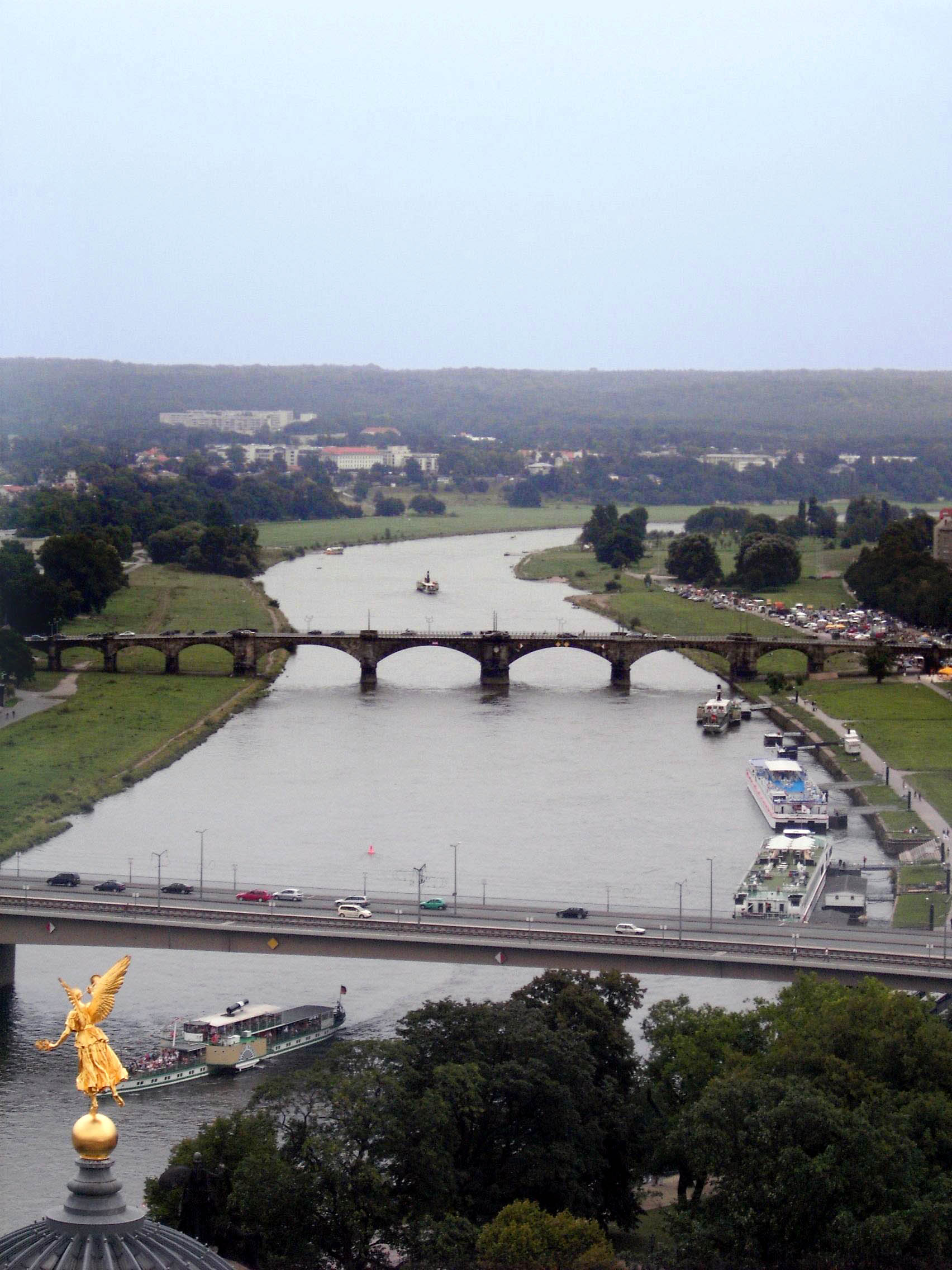
Heidegger goes on to elucidate how any building, and therefore anything, is a site of dwelling. He uses the example of a bridge and defines its capacity as a dwelling point by how it gathers—namely, how “the bridge gathers the earth as landscape around the stream.” Before there was a bridge, there was no site for a bridge—these two emerged contemporaneously. Before, there were two strips of land and a stream that were in no way connected, nor disconnected; they were simply there. However, once the bridge began being built, the location at the same time started becoming a site. Suddenly the two strips of land became disconnected and “needed” a bridge in that “location.” What was once nothing becomes a thing—a site of dwelling:
“Before the bridge stands, there are of course many spots along the stream that can be occupied by something. One of them proves to be a location and does so because of the bridge. Thus the bridge does not first come to a location to stand in it; rather, a location comes into existence only by virtue of the bridge.”

All fine and good. But what does this have to do with creeds? Well, the Nicene creed is such a site of dwelling, such a location that gathers what appear to be disparate elements of faith into one concise whole. Rightly speaking, there was no “outside” of the creed, i.e. heresy, until there was a creed as a location, just as there was no stream to be crossed until there was a bridge. There was no concise narrative of the “Christian faith” until there was a creed to articulate it—that is, these ideas emerged contemporaneously, just like the building and the dwelling-ness of the bridge emerged contemporaneously. There was no apostolic church, no catholicity, no spirit which bound these together, and no “looking for the resurrection of the dead” until there was the Nicene creed which allowed these things to emerge as such. Creeds, in short, gather disparate ideas and snippets of faith into a whole, a unity, in order that these things might emerge as doctrinal and orthodox—in order that the creed might gather those who speak it into a unity and a whole.

Just as building reveals itself to already be a kind of dwelling, so too we find ourselves dwelling with others by speaking the creed. We share a site with them, inhabit a space, side-by-side. This happens regardless of what interpretation we have of the creed we share—because it is not in our thoughts or beliefs about the bridge that we dwell in it (although our beliefs and thoughts matter), but in our mutual building of it, in our crossing of it. It is by saying a creed together that we inhabit the same religious site. It is in the speaking that the creed becomes what it is and we become what we are as those who speak it. It is in the building, in the speaking, we find a home.

Sunday, March 20, 2011

Theology: The Sacramental Horror of the Eucharist


By Hieronymus Bosch
via Wikimedia Commons
"As a kid growing up in Southern Indiana, I wasn't allowed to watch horror movies," Rev. Jonathan Weyer writes over at the Huffington Post. But, he tells us, horror can be sacramental, inviting us " to think about realities you can't see, touch or taste, but still exist." This works because horror shocks us out of our comfortable place, shows us that God is also the Lord of all things unseen. Weyer calls to our mind horrific medieval paintings, and he quotes Flannery O'Conner saying "that to reach the deaf sometimes you have to shout." Uncanny horror can open our eyes to the unseen and gruesome horror can take us through the reality of death to the greater reality of the Resurrection.

I agree, horror can be sacramental, but it goes further than that. The most fundamental Sacrament of all is a horror both uncanny and gruesome.

In the Eucharist, we come together at the Lord's Table, and we eat God.

We. Eat. God.

However symbolically or mystically you take that, it remains a horror. Bread and wine, wheat and grape, the sustenance of our earthly life becomes our God and we consume Him. Simple nourishment becomes cannibalism and deicide.

Yet, through that horror, we are joined with all the saints in an eternal feast, and secured in the Resurrected life of Christ. We go into the grave that we might be born again, to go out into the world as servants of God for the sake of others.

Today is Sunday. Either today, or some Sunday in the future, if you go to church you will partake of this highest Sacrament. So now, in this time of Lenten mourning, remember the horror, let it shout to your deaf ears, and let it turn you ultimately toward the beautiful truth of the Resurrection.

The Lord be with you.