Showing posts with label the bible. Show all posts

Friday, July 29, 2011

Deconstructing Theodicy: Why Job Has Nothing to Say to the Puzzle of Suffering by David B. Burrell

Image taken from Tower Books
I love this book. Let me just get that out of the way since this is going to be a quite lengthy review and exposition of David B. Burrell's Deconstructing Theodicy: Why Job Has Nothing to Say to the Puzzle of Suffering. I love it first and foremost because it is a beautiful exposition of one of my favorite books of the Bible and an adept exploration of an age old theological question.

In the text, Burrell does precisely the kind of theology that I strive to do - devoted to scripture while using the resources of philosophy, and even some outside literary and religious sources,1 to illuminate the text.2 Ultimately, Burrell perhaps strays further from the base text than I would want (always a danger with this approach) but in clinging to orthodoxy he avoids any egregious errors.

The central thrust of the book, as revealed by the title, is to show how the book of Job deconstructs the impulse to provide theodicies. A theeodicy, for those unfamiliar with the term, is the act of trying to "justify the ways of God to us" and explain "how there could be evil in God's world" (Burrell 13, 108).

Burrell begins with a detailed textual analysis of the structure of Job. The primary goal here is to show the contrast between Job's friends, who construct theodicies about God, with Job who directly addressed Him. From here, Burrell moves to an examination of the parallel figure of Ayyub in the Qur'an. This is ultimately a weak point in the text, since it proves to be almost entirely a tangent.3 His next step is to roughly outline Medieval commentaries on the text by Sadiah, Maimonides, Aquinas and Gersonides. Finally, Burrell uses arguments by Terrence Tilley and Marilyn McCord Adams to draw out the central thesis of the text.

Using the Medieval commentaries, Burrell builds up a picture of God I've discussed on this blog before. God is transcendent, yet immanent. God is in many ways a different order of being from His creatures, one who experiences eternity directly and can only be discussed analogically. Yet, precisely God's role as willing creator and conserver means He is also always present to His creatures. Because of this, we can always address Him, and the human mode of address is linguistic.

The arguments of Tilley and Adams then serve to do the titular deconstruction of the work.4 Tilley and Adams point out the emptiness, and indeed frequent cruelty of theodicies. Adams, for example, points out that the very act of theodicy can oftentimes miss the vibrantly real nature of people's suffering. The actual horrendous torment that human beings undergo becomes reduced to an abstract lesson. As Hume famously pointed out in response to the Augustinian explanation that evil is not an actual thing, but mere privation of the Good - that's a nice turn of phrase, but it does little to alleviate the reality of the pain experienced by sufferers, which is really the heart of the problem.5

Burrel then uses Adams's argument for his reconstruction. The very metaphysical immanence brought out by the Medievals, making God present to His creatures, provides the solution - the direct address and solidarity with the creator. This Burrell thinks, is what the structure of the dialectic in Job shows. As he puts it, 'even if Eliphaz and his companions are castigated for 'not having spoken of [God] what is right as [his] servant Job has'‎ (42:7), God cannot be commending Job for 'getting it right,' as we might say. For his cumulative outbursts are a far cry from attempts to explain his plight, never pretending to be more than bewildered complaints - despite the ways his "friends" often construed them.What the voice from the whirlwind commends is rather the inherent rightness of Job's mode of discourse: speaking (however he may speak) to rather than about his creator" (109).

The only major flaw with this argument is that at times in comes dangerously close to the infamous theodicy that waves off the problem by saying that "God moves in mysterious ways." As I once heard an atheist put it, this amounts to saying God is a "cosmic asshole". This is definitely not what Burrell is arguing however. Yes, God's movement is mysterious, and attempts to reduce it to simplistic theodicy will fall short, but we are not left with the distant jerk-God of mysterious movement. Instead, God is shown to be in sharp solidarity with us, and the correct theodicy is understanding that we can (and ought to) call on God and He will answer us.

The potency of this deconstructed theodicy is that it renders action, turning us away from the merely selfish explanation (read: excuse) of Job's friends. For the case of Job's friends is the case of many who engage in theodicy, it's motive ultimately selfish. Job's friends do not seek to aid him, they seek to justify the system as it is - the system which has (and continues to) benefited them. Rarely do theodicies do much for those in the midst of suffering, and often they do not even care to hear them. Yet when Job turns to God, crying out to his creator and even demanding an audience with him, excuse is turned to action. Evil is not explained away, it is confronted head on. Finally, it is radically personal, as Burrell shows in a denouement to his argument that traces out explanatory parallels between the central thesis of Job and Augustine's Confessions.6 

I will say that, while I do love this book, it is not without its flaws, the biggest of which is structure. If you follow through to the end, the whole picture of the book will become clear, the approach will seem haphazard until you get there. Part of this is that the central thesis of the book is only vaguely stated at the beginning and you have to wait to the end to get a clear picture of where Burrell is going. The other major flaw, of course, is the superfluous Ayyub chapter. Other than these flaws, the book is well worth a read, especially for students of theology and philosophy.

I would, finally, like to conclude where Burrell himself concludes, in a quotation from a sermon by Leo the Great for the feast of the transfiguration of Jesus (because I think it's beautiful):
The writings of the two testaments support each other. The radiance of the transfiguration reveals clearly and unmistakably the one who had been promised by signs foretelling him under the veils of mystery. As Saint John says: "the law was given through Moses, grace and truth came through Jesus Christ." In him the promise made through the shadows of prophecy stands revealed, along with the full meaning of the precepts of the law. He is the one who teaches the truth of prophecy through his presence, and makes obedience to the commandments possible through grace. In the preaching of the holy gospel all should receive a strengthening of their faith. No one should be ashamed of the cross of Christ, through which the world has been redeemed. No one should fear to suffer for the sake of justice; no one should lose confidence in the reward that has been promised. The way to rest is through toil, the way to life is through death. Christ has taken upon himself the whole weakness of our lowly human nature. If then we are steadfast in our faith in him and in our love for him, we win the victory that he has won, we receive what he has promised. When it comes to obeying the commandments or enduring adversity, the words uttered by the Father should always echo in our ears: "This is my Son, the beloved, in whom I am well pleased; listen to him." (Sermon 51, 3-4, 8, Patrologia Latina 54, 310-11, 313). 
_________________________________________________

1.  There is a bit at the conclusion of the text where I think Burrell gets a little too close to collapsing the transcendent but eminent God of Aquinas into Hindu pantheism, though he does ultimately relieve this by stressing the uniqueness of God.
2. This is not to say that this is the only, or even the best, avenue with which to approach scripture, but simply the one to which I feel called, and sadly one that is hard to find today. One could certainly get to Burrell's ultimate conclusion by way of reading Job purely through the rest of scripture. The very fact of the incarnation creates the solidarity between God and creation that Burrell reaches through Medieval metaphysics and paints much the same picture of the text. The attempts to explain suffering in the way of Job's friends is fruitless, it is in calling on God, and in His answering in solidarity, that a kind of answer is found.
3. Using another literary or religious text to gain a fresh perspective on a scriptural text often mired in centuries of traditional interpretation seems laudable (the long tradition of trying to turn Job into a theodicy, for example). However, that isn't what Burrell ultimately does. Rather, he presents a condensed version of an essay on the quranic character he found illuminating. While I think its great that Burrell enjoyed the essay, and that he values respecting the central religious text of another faith, the chapter seems to me to add nothing to his argument and so does not belong here.
4. Deconstruction, as my friend Fernando would be eager to point out at this juncture, is not mere destruction. Deconstruction, rather, takes something apart in order to reveal something new.
5. I actually happen to agree with Augustine that evil is not a thing but a privation - I just think its rubbish as a theodicy.
6. This bit also motivates me to want to try and write a confession of my own some day, though one that would have quite a different view of sin, and especially bodies, from Augustine.

Friday, February 25, 2011

Theology: Ruth and the Law that Kills

One of the things I love most about the Anglican tradition is the liturgy of the word. It's the part of the service where, every service, scripture is read. If there was one thing in my tradition that I think every church should have, this would be it. An interesting feature of this practice is that, as different pieces of scripture are read together, connections between verses get made that might not otherwise have been.

Last night, I attended evening Eucharist, and just such a connection was made. I'm going to quote the text whole here, in the spirit of the liturgy.

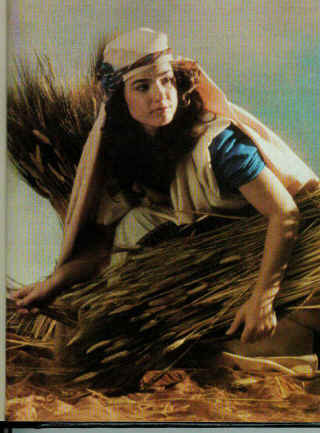
Now Boaz said to her at mealtime, “Come here, and eat of the bread, and dip your piece of bread in the vinegar.” So she sat beside the reapers, and he passed parched grain to her; and she ate and was satisfied, and kept some back. And when she rose up to glean, Boaz commanded his young men, saying, “Let her glean even among the sheaves, and do not reproach her. Also let grain from the bundles fall purposely for her; leave it that she may glean, and do not rebuke her.” 
 So she gleaned in the field until evening, and beat out what she had gleaned, and it was about an ephah of barley. Then she took it up and went into the city, and her mother-in-law saw what she had gleaned. So she brought out and gave to her what she had kept back after she had been satisfied. And her mother-in-law said to her, “Where have you gleaned today? And where did you work? Blessed be the one who took notice of you.” So she told her mother-in-law with whom she had worked, and said, “The man’s name with whom I worked today is Boaz.” Then Naomi said to her daughter-in-law, “Blessed be he of the LORD, who has not forsaken His kindness to the living and the dead!” And Naomi said to her, “This man is a relation of ours, one of our close relatives.” Ruth the Moabitess said, “He also said to me, ‘You shall stay close by my young men until they have finished all my harvest.’” And Naomi said to Ruth her daughter-in-law, “It is good, my daughter, that you go out with his young women, and that people do not meet you in any other field.” So she stayed close by the young women of Boaz, to glean until the end of barley harvest and wheat harvest; and she dwelt with her mother-in-law. (Ruth 2:14-23)
To give some context, Ruth was the daughter-in-law of Naomi, and a foreigner. Naomi had been living among Ruth's people when her husband, and then her sons, had died. Thus, they returned to Israel as widows, and one of them a foreigner - just about the worst situation they could be in. Now, the Old Testament law required that the edges of the fields be left so that foreigners, widows and orphans could glean from them. It also required that if members of the community were forced to sell property and thereby become impoverished, their property should be "redeemed," that is, bought back, by a close relative. This verse was read, and then the following New Testament Epistle reading.

Do we begin again to commend ourselves? Or do we need, as some others, epistles of commendation to you or letters of commendation from you? You are our epistle written in our hearts, known and read by all men; clearly you are an epistle of Christ, ministered by us, written not with ink but by the Spirit of the living God, not on tablets of stone but on tablets of flesh, that is, of the heart. 
And we have such trust through Christ toward God. Not that we are sufficient of ourselves to think of anything as being from ourselves, but our sufficiency is from God, who also made us sufficient as ministers of the new covenant, not of the letter but of the Spirit; for the letter kills, but the Spirit gives life.

But if the ministry of death, written and engraved on stones, was glorious, so that the children of Israel could not look steadily at the face of Moses because of the glory of his countenance, which glory was passing away, how will the ministry of the Spirit not be more glorious? For if the ministry of condemnation had glory, the ministry of righteousness exceeds much more in glory. For even what was made glorious had no glory in this respect, because of the glory that excels. For if what is passing away was glorious, what remains is much more glorious.
Therefore, since we have such hope, we use great boldness of speech— unlike Moses, who put a veil over his face so that the children of Israel could not look steadily at the end of what was passing away. But their minds were blinded. For until this day the same veil remains unlifted in the reading of the Old Testament, because the veil is taken away in Christ. But even to this day, when Moses is read, a veil lies on their heart. Nevertheless when one turns to the Lord, the veil is taken away. Now the Lord is the Spirit; and where the Spirit of the Lord is, there is liberty. But we all, with unveiled face, beholding as in a mirror the glory of the Lord, are being transformed into the same image from glory to glory, just as by the Spirit of the Lord. (2 Corinthians 3:1-18)
Typical of Paul, these are some packed, one might even say frantic, verses. There's a lot of good stuff in there. I want to draw attention to a particular thing said in this section. Paul says " the letter kills, but the Spirit gives life." This is a common theme in Paul - the Spirit is life giving, but the letter (or the law) brings death. I've always found this puzzling. It seems intuitive to me that the law tells us what is good, and how is doing what is good destructive? Especially when the spirit also tells us to do good, oftentimes good over and above what is demanded by "law"?

Then I read these two verses together, and suddenly it clicked. See, there's another detail to the Ruth story. Boaz wasn't Ruth's closest relative - there was another. The closest relative should have been the one to redeem Ruth, but he didn't, instead Boaz had to. Boaz did the right thing, according to the law, and by the very nature of the law, the one who didn't do his duty was brought under condemnation. The law separates, divides, creates a divide, becomes a veil. In contrast, the Spirit opens up. When we act according to the Spirit, we do what is good, but that goodness flows out of ourselves and into Others. Our right acting does not harm, it edifies.

I don't pretend that this totally encompasses what Paul meant. I doubt such a thing could rightly be encompassed, but I think it is an interesting angle with which to approach it. 

Friday, February 11, 2011

Theology: We Bewail our Manifold Sins and Wickedness

In the 1928 Book of Common Prayer, the confession of sins says "We acknowledge and bewail our manifold sins and wickedness, Which we, from time to time, most grievously have committed, By thought, word, and deed, Against thy Divine Majesty, Provoking most justly thy wrath and indignation against us." Harsh words. I've heard it complained that they make it sound like we commit murder every week. And yes, they do, because we do. 


My roommate Josh recently wrote a post over on his blog about hypocrisy. In that post, he talks about a distinction between the cynic and the hypocrite. The cynic is one who sees the flaws of the system he is a part of, withdraws from them, and claims for himself superiority. The hypocrite, on the other hand, is one who sees the flaws of his system, bewails them, strives to get out of them, all the time realizing that he is a part of them inescapably, and that because of this he will always be part of the system.


We live in a world of horrendous injustice, our entire economic system is tied in with the exploitation of the weak, the destruction of animals, the rape of our world. What is more, this side of the Resurrection, we live as fallen bodies oftentimes overwhelmed with desire that leads us to sin. We cannot withdraw, not until Christ returns and we are transformed. We must fight it, but we must, always, realize that we cannot escape it. We sin each day, even in ways we don't realize. I sin when I look at another person and put her into a box (vain Hollywood girl), I sin when I eat chocolate harvested by slaves, I sin when I sit in a car whose fumes are destroying the planet. There are even situations, as I have talked about before, where any action I can possibly take is wrong (kill the one, or let the many die?) 


This isn't to say that I am some wicked or worthless person. I have been made in the image of God, and remade in the Resurrection of Christ. I have been sanctified and my sins are no longer held against me. I am beloved of God. When I bewail my wickedness, what I bewail is that I am not yet whole. I have been made clean, the seeds of the Resurrection have been planted in me, but they have not yet blossomed. 


This is why we cannot judge. But for the irresistible Grace of God, what would we be? 

Thursday, December 2, 2010

Theology/Politics: That Monstrous United Nations (Some Vitriol)


There's a small group of people in the world today, almost entirely American, who have made something of a sport trying to tie current world events into the book of Revelation. Often, their reasoning is quite dubious - a beast with ten horns? Clearly a one world government with ten regions!1

One of the favorite targets of these prognosticators is the United Nations. The UN is a world spanning power (never mind that it's powerless) and that looks kind of like a on world government, which we all know will be the government of the anti-Christ (see above). And, they like to point out, the UN wants to split the world into ten governmental regions (something I've never been able to confirm outside of their circles) and the Bible talks about a beast with ten horns that is so clearly a one world government with ten regions, the connections couldn't be more clear (ten being a very uncommon number and all).

That isn't to say I'm a fan of a one world government or anything. Often, entities that seek one world government are grasping and imperialistic (Ancient Rome, Hilter's Germany, etc.) and, even where they aren't, they would set up an inefficient, centralized system of government, which you all know I'm no fan of.

Heck, the UN is a far from perfect institution. Mostly powerless, where it does exert influence it often does more harm than good (look at affiliate organizations like the World Bank) but all this has nothing to do with poverty.

But the UN is no one world government, it's not even close, and even if it were, their reading of Revelation is dubious to begin with.

What the UN does do is tell countries (mostly ineffectively) what to do. Countries like the United States.

And that's the real reason they hate and fear the UN, because it has the presumption to tell the United States of America (God's Country after all!) what to do.2

_________________________________________________
1. Actually, since at least some of the point of Revelation (I think) is to prophesy historical patterns (as opposed to specific historical events) they can even be right, but not for the reasons they think.
2. I should say I don't think most people who follow these "interpreters" of Revelation have this view, I solely blame the "interpreters." I doubt even they are quite aware of it. This is simply a symptom of patriotism meaning more than faith in God.

Monday, October 19, 2009

Politics/Theology: Conservative Bible Project

Some time ago, I wrote an article criticizing Conservapedia for deciding to rewrite the Bible "conservatively". I still think this is absurd. However, I just read something written by Slacktivist on the same topic, and I think his diagnosis is (as often) horribly wrong.

Fred thinks what's going on with the "Conservative Bible Project" is just a result of their conservative outlook. They're conservative and don't want to change, the Bible is liberal, so of course they have to change the Bible. In a way this is right, what's being done does relate to their conservatism, but that's not simple enough. Ultimately, what Fred is doing is saying that conservatism=idolatry. This is absurd. What's going on here is idolatry, the folks at Conservapedia have made ultra-conservatism their god, and the bible has to give. This isn't exclusive to conservatism though, liberalism can do this just as easily. Mostly Fred doesn't do this (though I think he gets close at times) but it can easily be seen in the likes of Bishop Bruno of the Episcopal Church, who will always choose whatever his ultra-liberal agenda dictates. A perfect example of this would be the joint Hindu-Episcopal service he put on.

Of course, we all do this to some extent, taking our own biases and bringing them to the Bible. I think for this we just have to thank God for his grace, which applies not just to our acts but our thoughts. Nevertheless, we have to try not to do this as much as possible, and we should avoid making either liberalism or conservatism, or any number of other things our god.

 I would say that one thing Christians should notice was how Jesus worked out his agenda in the world. He didn't work at a political level, but on a personal level. There are plenty of rational reasons to avoid trying to use the government to change the world to our image, but there is also a very good religious one - the imitation of Christ.

Wednesday, September 2, 2009

Theology: The Measure of Christian Law, Part 2

About an hour ago I posted up some meditations on the nature of Christian law, after which I set down to reading more of St. Augustine's On Christian Doctrine. A little while ago I came upon this:


Whoever, then, thinks that he understands the Holy Scriptures, or any part of them, but puts such an interpretation upon them as does not tend to build up this twofold love of God and our neighbour, does not yet understand them as he ought. If, on the other hand, a man draws a meaning from them that may be used for the building up of love, even though he does not happen upon the precise meaning which the author whom he reads intended to express in that place, his error is not pernicious, and he is wholly clear from the charge of deception. (On Christian Doctrine, Book One, Chapter 36)

I think that's a very good way to put it, and the fact that Augustine that says it gives it a little more weight.

Theology: The Measure of Christian Law

A brief meditation on scripture:

Jesus said to him, “ ‘You shall love the LORD your God with all your heart, with all your soul, and with all your mind.’ This is the first and great commandment. And the second is like it: ‘You shall love your neighbor as yourself.’ On these two commandments hang all the Law and the Prophets. (Mathew 22: 37-40, emphasis added)

This then, is the measure of Christian law – when you read the commands of scriptures, ask yourself if what you think they are saying aligns with this. Does your interpretation concern loving God or your neighbor? If not, then you’re probably reading it wrong.

Sunday, August 16, 2009

Politics: The Bible is a Liberal Conspiracy

This just in from my favorite nuts over at Conservapedia – the Bible, apparently, is a liberal conspiracy (well, not all of it, just the parts that talk about compassion, and not judging other people). For those of you who haven’t heard of them, Conservapedia is the “conservative” and “trustworthy” Wikipedia (which is, of course, a liberal conspiracy). The truth, of course, is conservative, and so we must create a website dedicated to carefully censoring all information so that the public only gets the truth, unbiased by liberal lies. This is naturally the only way to be trustworthy. Now, I consider myself pretty conservative, so this kind of absurdity really get to me. It’s kind of like having an idiot sibling who always hits on the waitresses, only more embarrassing.

Anyway, on to this business about the Bible being a liberal conspiracy. This is not, first of all, the same as the King James only folks. That particular group believes the King James Bible is the only legitimate translation, because more recent ones have used as reference documents that were not available when the KJV was translated and have decided to remove a few verses as inauthentic. I happen not to agree with that group, but they’re not really crazy. The folks at Conservopedia, however, have decided to retranslate the Bible, and use as many conservative ideas as possible. These include “homeschool” for Jesus teaching his disciples and “rich” with “idle miser” (because stories in which Jesus admonishes the rich look bad for rich conservatives I guess…).

That business about the story of the woman caught in adultery being maybe not in the original gospel, by the way, has been known for quite some time, and really should be common knowledge, it’s in the foot notes of most translations of the Bible after all. There are however, very early copies of the story and its generally acknowledged that it’s a genuine story about Jesus that got later inserted into John. Of course, regardless of whether it’s genuine or not, there’s plenty of other verses about not judging other people which aren’t in question.

Now, I attend college, so I understand liberal bias (well, pseudo-liberal, there’s really nothing liberal about the way they think) but this is not the way to handle it. Conservapedia, YOU’RE DOING IT WRONG!!!