I'm fully entrenched now in finals week, my sanity drains, my schedule presses in on me like a vice-grip. I'll get through it of course, and there's a light at the end of the tunnel. Specifically, I'm heading off for 10-days in merrie olde yngland. Can't wait.
Oh, and I'm planning to blog about my trip, though I'm not sure yet how steady I'll be able to be.
According to some scientists cited in Slate, the study which reports that a bacteria was able to replace phosphorus with arsenic was flawed, and the data is at best inconclusive. Well, if that's true, it's rather disappointing, though not nearly so much as NASA hinting they'd found alien life when earth-based arsenic life was all they had to report.
I don't normally do music reviews, mainly because, while I love music, I'm no musician and I don't feel like I have the vocabulary to talk about it. That said, I recently saw the band the Orange Effect in concert for the second time, and they are so incredibly good, that I feel compelled to give them a review.
the Orange Effect is a local band in Orange County, and I'm not entirely sure how to describe their genre. They call themselves "Indie-Americana-Folk-Pop-Post-Rock-Alt-Country-Neo-Soul" which seems good enough to me.
The band has a very energetic, lively and varied sound. Harmonies are a big part of their music and the bass and drums are very prominent in their songs, giving them something of a martial sound.
The real thing that makes the Orange Effect stand out, though, is the sheer talent of its members. Every single one of them is a brilliant musician, and all of them but the drummer (who is one of the best I've seen) play multiple instruments and sing. A result of this is that the Orange Effect really feels like a band, rather than one guy with backup.
They also have a fantastic stage presence that makes their concerts a blast. It took me awhile to get out to one as a friend of mine, Tim Bauer, is in the band, and going out to a friend's concert can be a bit nerve wracking. If it's not a great band... awkward. Well, if you live in Orange County, don't make the mistake I made, get out to one of their concerts. I'm certainly going to be making it out to every one I can.
They've also released a CD, which I recommend you pick up. A word of caution there, though. While their music is absolutely amazing, the mixing of the CD isn't perfect, and that has some unfortunate results. As I said, the drums, bass and harmonies are a big part of what makes their music, and the guy who mixed the CD doesn't seem to have gotten that as the harmonies have been turned into backup vocals and the drums and bass likewise pushed into the background.1 This by no means makes it a bad CD, it's just not a very representative one. Had I not seen them in concert, I wouldn't have noticed the problem, I just would have thought the band more generic than it really is.
All my criticisms aside, I've listened to the CD close to a dozen times since I got it on Friday, and you should definitely pick it up. More importantly though, if you live in or around Orange County, do yourself a favor and go to one of their concerts - you won't regret it and you'll be supporting some genuinely brilliant local music.
P.S. The sideshows for their CD release concert, Dawson and Marrie and Alex Rhodes were also pretty sweet.
___________________________________________________________
1. I've found turning the bass and treble up on my sound system helps with the drums and base, though not the vocals.
There have been quite a lot of bizarre discoveries of bacteria, called extremophiles (makes me think of a hardcore sports germ), living in insanely harsh environments. Well, researchers have discovered that a bacteria living in California's Mono Lake can replace the phosphorous that serves as the skeleton of its DNA with arsenic. Pretty cool I'd say.
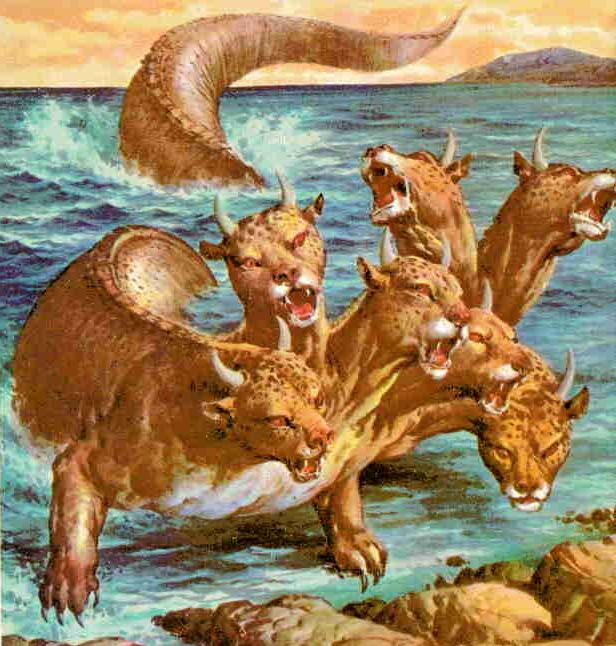
There's a small group of people in the world today, almost entirely American, who have made something of a sport trying to tie current world events into the book of Revelation. Often, their reasoning is quite dubious - a beast with ten horns? Clearly a one world government with ten regions!1
One of the favorite targets of these prognosticators is the United Nations. The UN is a world spanning power (never mind that it's powerless) and that looks kind of like a on world government, which we all know will be the government of the anti-Christ (see above). And, they like to point out, the UN wants to split the world into ten governmental regions (something I've never been able to confirm outside of their circles) and the Bible talks about a beast with ten horns that is so clearly a one world government with ten regions, the connections couldn't be more clear (ten being a very uncommon number and all).
That isn't to say I'm a fan of a one world government or anything. Often, entities that seek one world government are grasping and imperialistic (Ancient Rome, Hilter's Germany, etc.) and, even where they aren't, they would set up an inefficient, centralized system of government, which you all know I'm no fan of.
Heck, the UN is a far from perfect institution. Mostly powerless, where it does exert influence it often does more harm than good (look at affiliate organizations like the World Bank) but all this has nothing to do with poverty.
But the UN is no one world government, it's not even close, and even if it were, their reading of Revelation is dubious to begin with.
What the UN does do is tell countries (mostly ineffectively) what to do. Countries like the United States.
And that's the real reason they hate and fear the UN, because it has the presumption to tell the United States of America (God's Country after all!) what to do.2
_________________________________________________
1. Actually, since at least some of the point of Revelation (I think) is to prophesy historical patterns (as opposed to specific historical events) they can even be right, but not for the reasons they think.
2. I should say I don't think most people who follow these "interpreters" of Revelation have this view, I solely blame the "interpreters." I doubt even they are quite aware of it. This is simply a symptom of patriotism meaning more than faith in God.
A little over a month ago, I wrote a post on homosexuality, and on what I see as a mistake in how the debate about it is usually conducted. I got many responses to that post (protip: if you want your blog to get a lot of hits, write on something controversial) and, in response to one of those, I wrote a comment about the relationship between genetics and choice.
As I said in that comment, genetics are, in one sense, predetermining of the kind of people we will be. It might seem, then, that where genetics controls us, freedom is absent. Yet, I contend, there is a much more complicated relationship here, and, speaking more broadly, a much more complicated relationship between limits in general and freedom.
Typically, we think of freedom, and consequently choice, as the ability to be free from constraints. Often, this is a metaphysical reflection on a political reality. A person held back by the law from driving 100mph down a busy street is not, in one sense, free to perform that action. And there is some truth in this, an utterly predetermined being, with no choice whatsoever in its course of action (for example, a rock) would in no sense be free.
However, there is a flipside to this. In having limits, I have something to act against, and that in turn actually gives me choice. Take the above mentioned case of genetics - genetics gives me a certain sort of body, and that body gives me limits (I can't fly or run faster than a locomotive), yet at the same time it is only in terms of that body that I can make many of my choices (whether to type and this computer or go for a jog for example). Without the limits of a body, the choices of physical actions would be meaningless. Likewise, the law may prevent me from going 100mph (without consequences) but this in turn means I'm free to cross the busy street without fearing a car barreling over me at 100mph.
This last case also relates to a further point, that limits not only make us free, but they make us free to flourish. This is particularly true in the case of morality. Whatever your views to the objectivity of morality, anyone would agree that a person who feels protected from murder will be more likely to thrive (even though the choice of murdering another is thereby cut off to him).
Further, if we have in mind any view of human nature in which men are fallible and liable to fall into grave immorality, whatever system or training helps that nature to take hold of its passions and become thereby better able to follow morality, even though it blocks off the former bad choices, creates in the man another kind of positive freedom.
Thus, freedom, at least for humans, seems to always exist in light of limits. Limits are a precondition for genuine choice1. _______________________________________________________________ 1. I cannot claim these ideas as my own, though the specific expression of them, especially in terms of embodiment, is. I'm not sure exactly where I've picked up these notions, but I am aware that I have heard similar views advocated at various times and do want to give those individuals due credit to the best of my ability. It seems to me that Kant espouses something like this view in the last section of the Groundwork of the Metaphysics of Morals, though typical of Kant it is written in very obscure language that makes it hard to be sure. I've further heard a discussion of the difference between negative freedom (freedom from restraints) and positive freedom (freedom for a kind of action) given at certain times. One case was a Mars Hill Audio discussion, and another was in a discussion of the ideas of Phillip Blond. Finally, my wonderful Bishop and pastor Todd Hunter espoused a similar idea in a sermon while talking about training in virtue. This in turn, I am told, comes from Aristotle and can also be found in Anselm (and no doubt Aquinas).
Starship Troopers by Robert A. Heinlein 1960 Hugo Award Winner for Best Novel
After finishing The Forever War, it seemed appropriate to pick up and read the book which, in many ways, had been its precursor. Starship Troopers is considered by many to be the origin of the "space marine" genre (though the titular troopers are actually army) and also criticized by many as being, supposedly, favorable to fascism.
I can't speak for it's views on fascism, but I can see how it started a genre. The book is a fascinating piece of world creation, and chock full of ideas. It's important to know coming in that these ideas are the point of the book. Certainly, Juan Rico, the narrator, is a definite character whose fate you care about, but the narrative is not about an exciting story, and at times gets bogged down in long philosophy or history lectures on the part of his instructors. The first time I picked up this book a few years ago I ended up getting bored with it while Rico was still in training because I'd been expecting an exciting war story.
I really don't see fascism in the book, though it was decidedly pro-military and critical of free democracy. Heinlein dedicates the story"to all sergeants everywhere who have labored to make men out of boys." And that, ultimately, seems to be the theme of the story. Juan Rico begins as a young man, unsure of himself, mediocre in school and unthinkingly following his friends, and bit by bit the military takes him away from this.
Finally, it should be noted that the mobile infantry of Starship Troopers is a voluntary corps. The book is critical of conscription armies, and in many ways this is what sets it apart from The Forever War. It's notas simple as Starship Troopers being pro-military and The Forever War being anti-military. The one is about a volunteer army fighting to defend its homeland, the other about a conscript army fighting for reasons unknown. One is Vietnam, the other World War 2. Both authors have interesting perspectives (though I don't agree fully with either) and, though Haldeman did criticize the book for being too pro-military, both share a mutual respect.
This is another one I recommend to pick up. Oh, and I'm told it's nothing like the film.